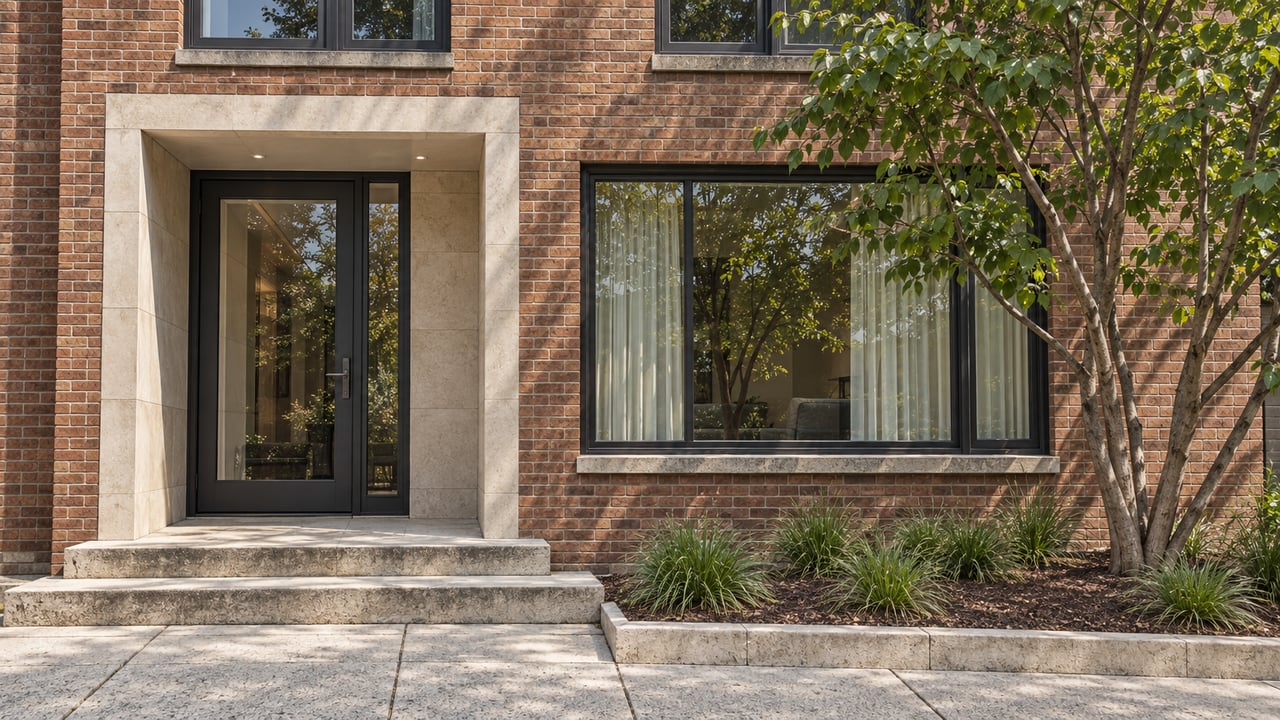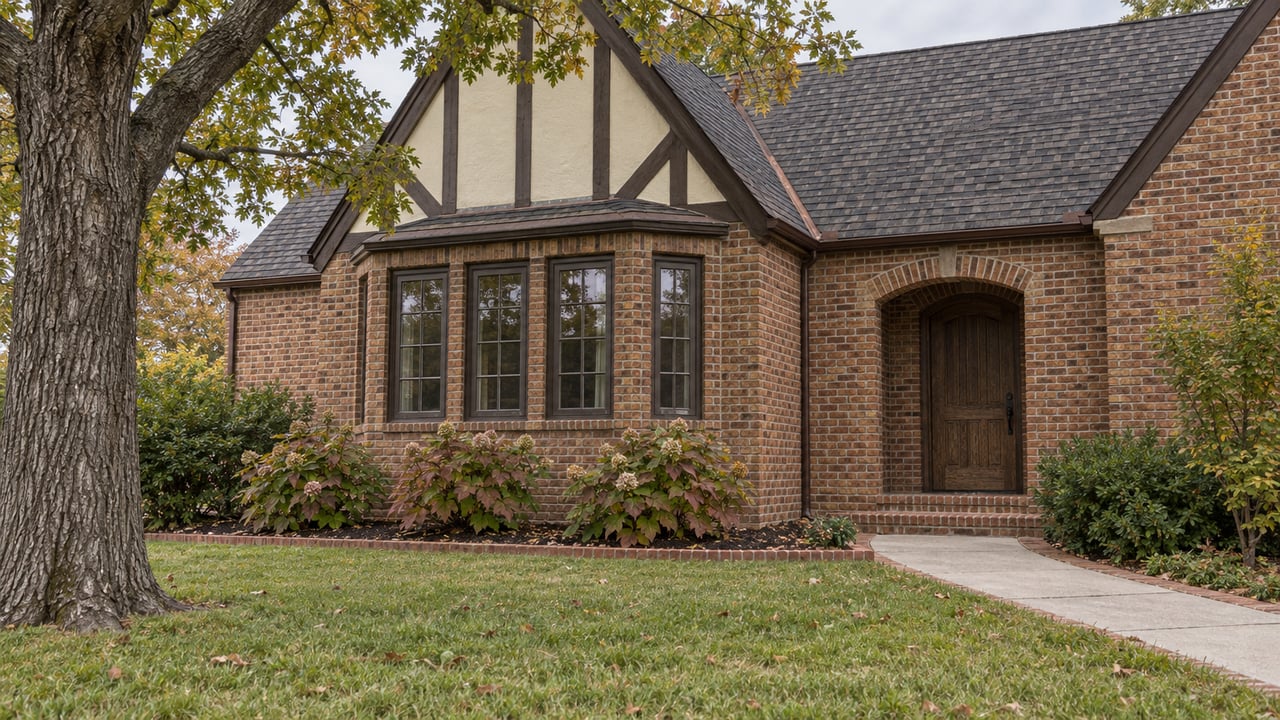
What protects a 1920s Tudor in Lakewood? Pedigree didn't save the one at 6835 Westlake Avenue. Sir Alfred Bossom, the English architect behind the Magnolia Building, designed it in the 1920s for Arthur Kramer, president of the A. Harris and Co. department store. It had more than 8,300 square feet on 1.24 acres. The Dallas Morning News reported that it was torn down the week of April 23, 2026.
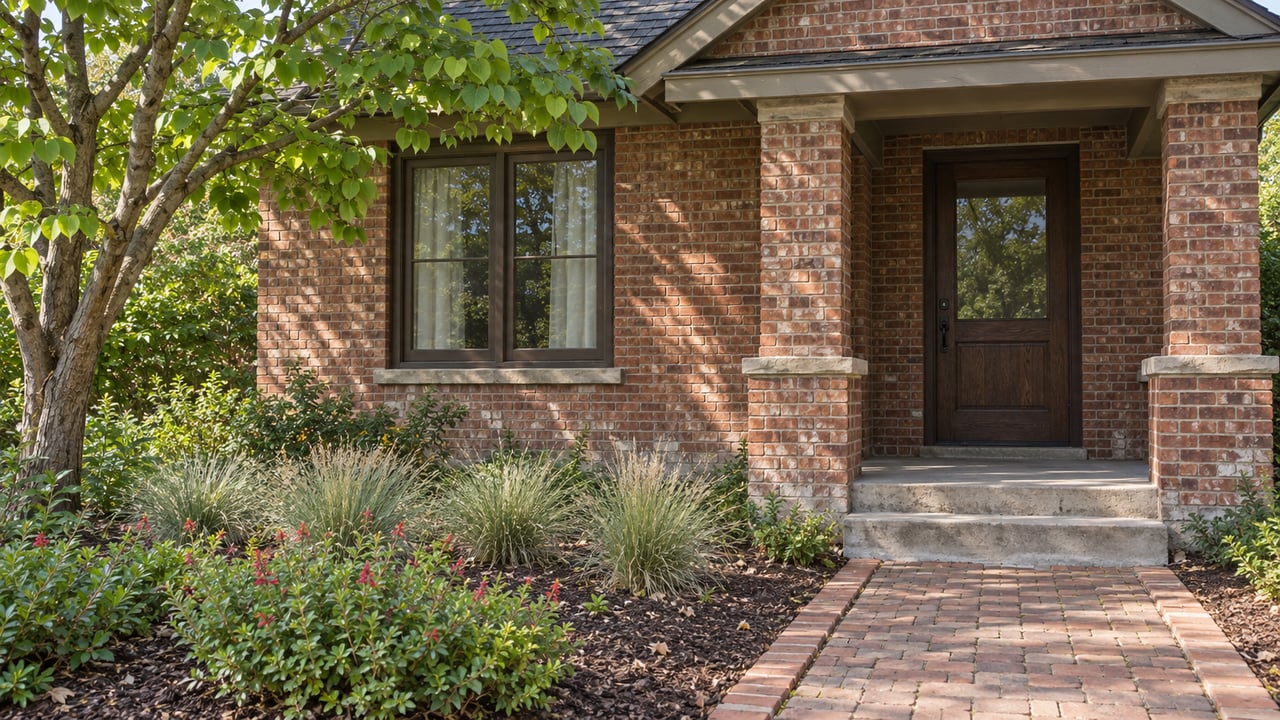
Walk one block north, into the 6900 block of Westlake, and the rules are different. Most of the houses there are Tudors built between 1925 and 1936. Each one is listed by address in a city ordinance that limits when it can be demolished. The houses look alike. The legal protection doesn't. In Lakewood, a house is protected because its address made the map, and that map came out of a negotiation among neighbors.
The Block That Made the List and the One That Didn't
Bossom Manor, as the house was known, spent close to two years on the market. The DMN reported a $5 million listing in July 2024, a sale recorded in September 2025, and a relisting in November 2025 at $4.4 million. A March 10, 2026 deed then transferred the property from a trust to an LLC with an Austin address. The coverage didn't say what will be built on the lot, and no plans have been made public.
The house wasn't covered by the conservation district expansion that took effect a year before it was demolished. CandysDirt pointed that out in December 2025 when it put the house on its list of Dallas' most endangered properties. The ordinance shows the same thing. Its Westlake inventory starts at 6901 and runs through 6964, and 6835 isn't on it.
| 6835 Westlake | 6900 block of Westlake | |
|---|---|---|
| Era and style | 1920s Tudor | Mostly 1925 to 1936 Tudors, plus a few Spanish Eclectic, Minimal Traditional, Ranch and newer Tudor-style houses |
| Listed in Ordinance 33026 | No | Yes, address by address |
| Demolition standard | Not governed by the Tract IV test | Covered styles need to meet the 80 percent repair-cost test |
| Status as of October 2026 | Demolished in April 2026 | Standing under the ordinance |
How a Map Gets Drawn by Consent
The expansion is officially Tract IV of Lakewood Conservation District No. 2, created by Ordinance No. 33026. The city's Lakewood page gives its effective date as March 31, 2025. Supporters wanted it because the original 1988 district left out many of the architecturally significant houses on Lakewood, Lakeshore, Avalon, Tokalon and Westlake.
The boundary didn't come from an architectural survey alone. CandysDirt's account of the vote describes three years of debate and 15 ordinance meetings, followed by organized opposition. As a compromise, supporters redrew the map to drop areas where owners objected. In November 2024 the City Plan Commission voted unanimously to remove a large part of the original proposal.
When the City Council took the vote on February 26, 2025, Council Member Paula Blackmon cut the map once more. Her amendment removed a section connecting Copperfield Lane to Wendover Road and one home at the end of Tokalon Drive. The amended expansion passed unanimously. Summer Loveland, one of the residents who started the effort, said afterward that "the majority [of residents] who were opposed were removed from the map."
That's why the line matters to a buyer. The map follows where owners agreed to join, so a period house that looks as if it belongs in the district can sit just outside it. You can't tell from the street which side a house is on.
What the 80 Percent Test Actually Measures
Inside Tract IV, original houses built before 1961 in five contributing styles are protected. The styles are Tudor, Spanish Revival/Eclectic, French Eclectic, Colonial Revival and Neoclassical. Houses listed as Significant are protected too. One of these houses can be demolished only when bringing it up to Dallas' minimum property standards, using materials similar to the originals, would cost more than 80 percent of its improvement value as set by the Dallas Central Appraisal District. The applicant has to back that up with a building inspection report, an engineer's report, and an itemized list of repairs broken out into labor and materials.
The test compares repair cost with what DCAD says the structure is worth, and it ignores the land. On a large lot, much of a property's sale price can come from the land, so a high price says little about whether a house would pass. A buyer trying to estimate a house's chances would start with its DCAD improvement value and a contractor's repair estimate.
Houses that aren't covered can be demolished. If a new house goes on one of those lots, it has to be built in one of the five contributing styles. The draft that went to Council also required front facade materials to be typical of the house's period and style, and it banned vinyl and aluminum siding. The complete standards are in the text of Ordinance 33026.
Which Side of the Line You Are Buying On
The same rules apply whether you're inside the district or living next to it. A buyer inside Tract IV accepts limits on their own house. In return, the houses around them face the same limits. A buyer just outside has more freedom with their own property and no say over what happens next door.
Before making an offer near the edge, these are the questions to answer:
- Is the address in the ordinance inventory? The exhibit lists properties one by one, with style and year built. That list settles it. Assumptions based on the street don't.
- Is the house a covered style built before 1961? That decides whether the 80 percent test applies or whether any new house simply needs a contributing style.
- What are the neighboring lots? For a house just outside the line, it helps to know whether the large lots nearby are inside or outside the district.
- Is there a permit history? The city's online records search works by address, and copies of plans can be requested through an open-records request.
The same question comes up around White Rock Lake. In December 2025, CandysDirt wrote about 3505 West Lawther, a 1955 Charles Dilbeck ranch on 1.12 acres facing the lake. It went under contract twice in 2025, after nine days on the market in April and three days in December. The listing described the site as an opportunity to create a custom lakefront residence. That reporting doesn't say what happened to the house afterward. It's another case of a large lot and a notable architect, where the outcome depends on rules the house's reputation doesn't settle.
Why the Numbers Can't See the Line
Comparing prices won't show where the boundary runs. MetroTex has stopped publishing NTREIS data for MLS-defined areas, so its monthly reports no longer include a Lakewood-level breakdown. The closest current figures cover the whole Dallas-Plano-Irving division. In September 2026, the single-family median there was $402,990, flat from a year earlier. Median days on market was 64, homes sold for 93.5 percent of list price, and inventory was 4.6 months. The same report counts only MLS sales and leaves out builder and other off-MLS sales.
A regional median says nothing about whether a 1927 Tudor on a big lot falls under an 80 percent demolition test or can be replaced with any house in a contributing style. For Lakewood buyers, the ordinance exhibit is more useful than the market report.
A Few Distinct Questions
Is the whole Lakewood area under one conservation district? No. The original district dates to 1988, and Tract IV was added in 2025 through a separate ordinance. Councilmember Blackmon noted at the vote that the surrounding area includes six conservation districts and five historic districts.
Did the final ordinance soften the demolition rule? No. The enacted 80 percent test and its list of covered styles are essentially the same as in the February 3, 2025 draft.
Does a conservation district stop renovation? It sets standards for exterior design, renovation and new construction. The full details for each district are in its ordinance. For a specific project, the ordinance text is the source to check.
If you're looking at a period house near the edge of Lakewood's conservation map, I'm glad to go through the ordinance inventory with you and look into permit history and the neighboring lots before you make an offer. With my family background in custom-home building, I pay close attention to what a set of rules allows on a lot. Christian Holmes can help you work out which side of the line a house is on. Let's Connect.
This article is general information, not legal, tax or financial advice. Consult a qualified professional about your situation.